
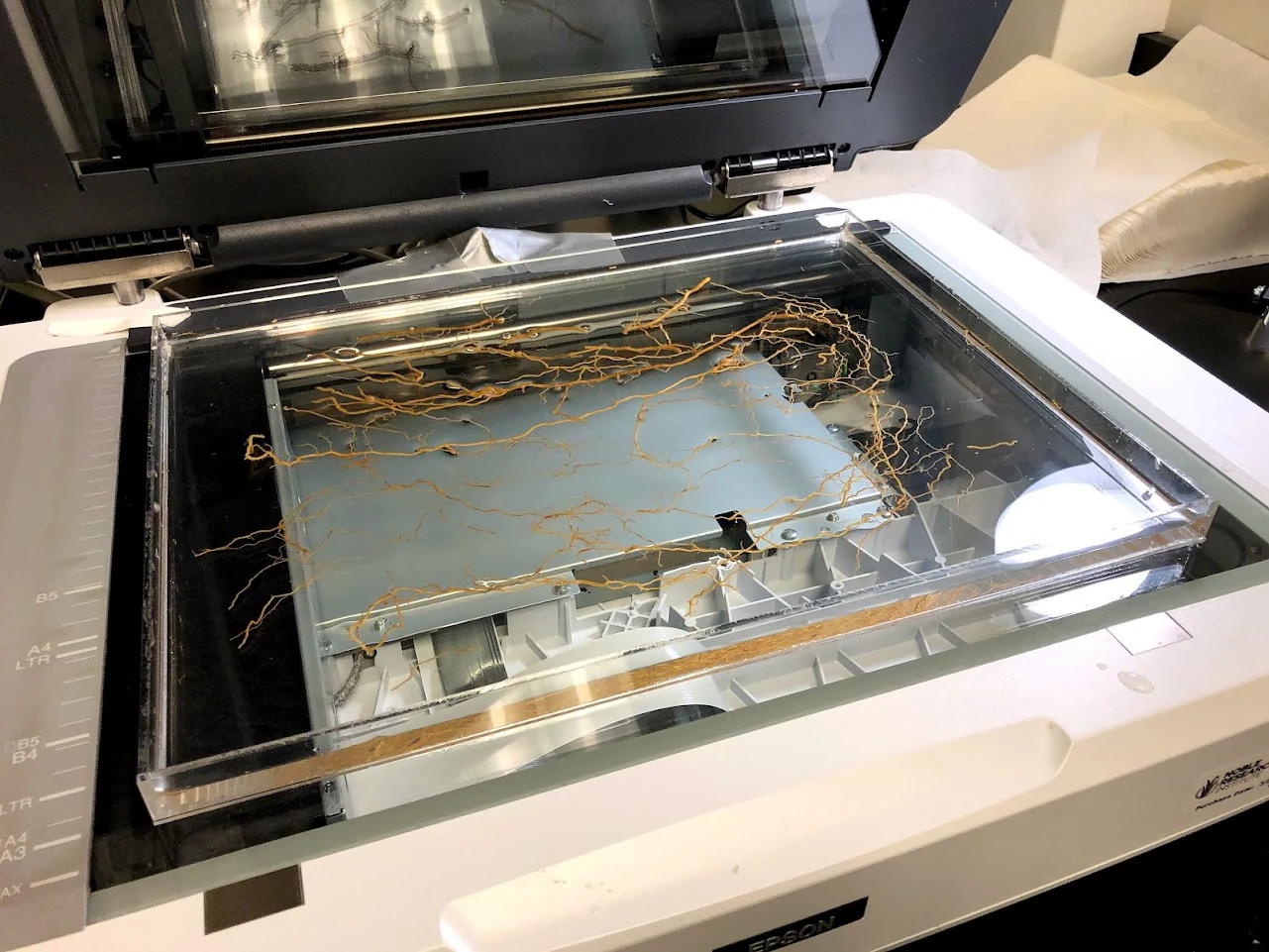
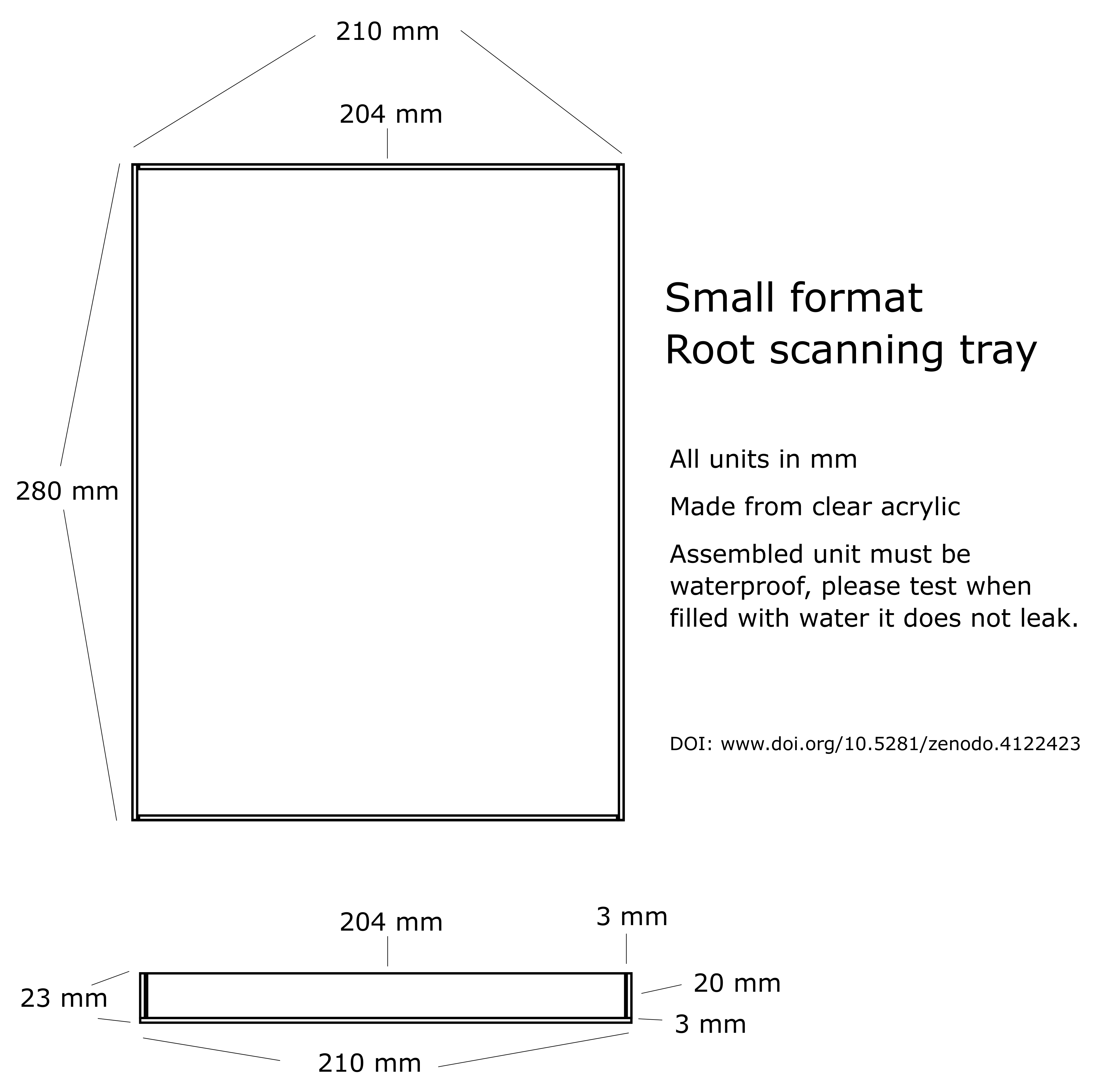
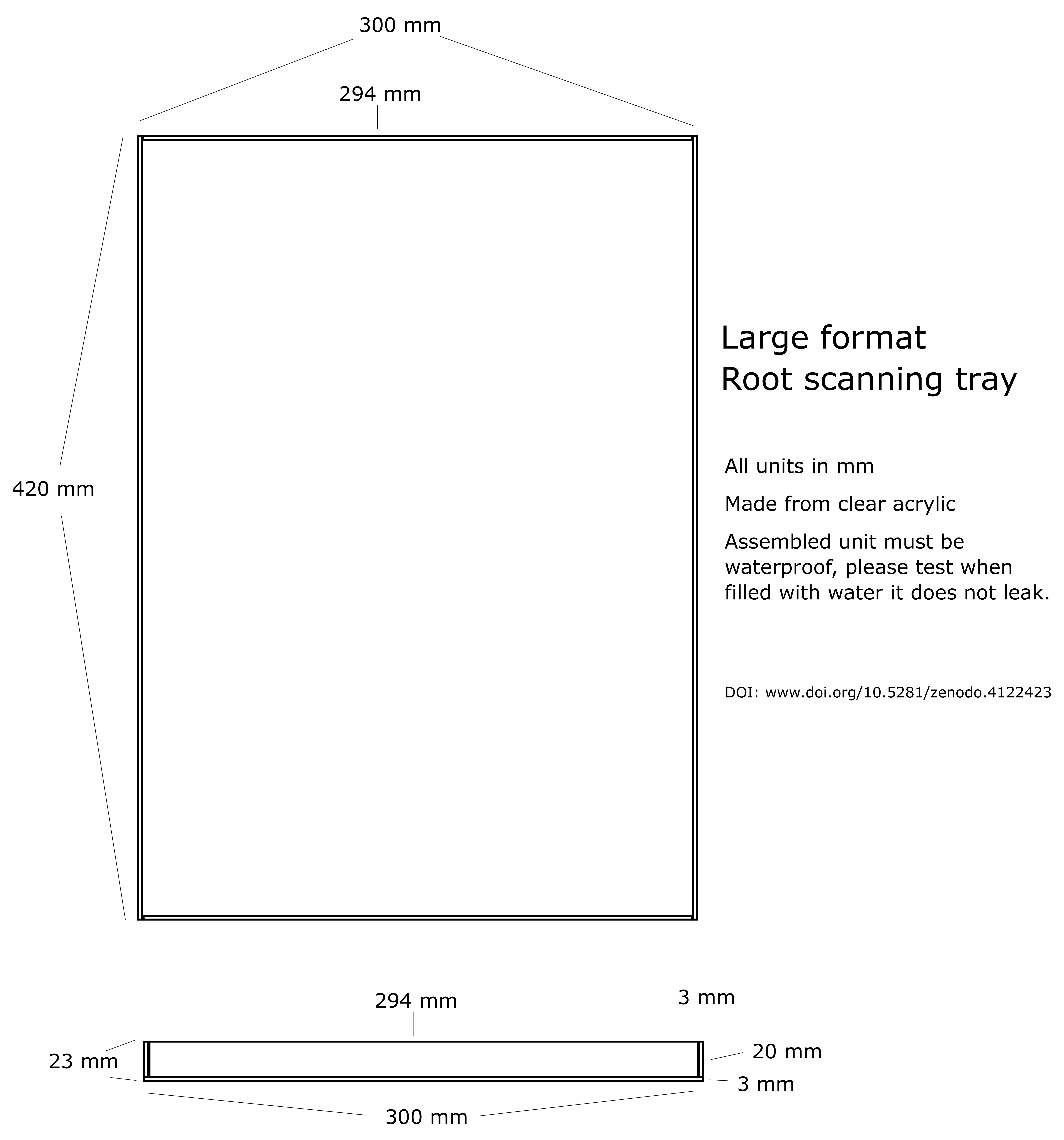
Washed roots spread in a clear acrylic tray on a flatbed scanner.
Washed roots are spread in water in a scanning tray before imaging with a flatbed scanner. Follow the root-scanning protocol, then analyze the images with RhizoVision Explorer.
Made for washed-root imaging
Root scanning trays
Arrange washed roots in a shallow layer of water, reduce overlaps, and capture a high-contrast image with a transparency-unit flatbed scanner. These trays follow the original acrylic tray plans published by Larry York in 2020.
| Specification | Small | Large |
|---|---|---|
| Outside dimensions | 280 × 210 mm | 420 × 300 mm |
| Internal width | 204 mm | 294 mm |
| Clear acrylic | 3 mm | 3 mm |
| Wall / overall height | 20 / 23 mm | 20 / 23 mm |
| Format | Letter-size | A3 |
Check your scanner clearance and transparency lighting before ordering. The published plans reference the Epson Perfection V850 for the small tray and Expression 12000XL for the large tray.
Original root-scanning tray designs ↗Research roots. Practical tools.
From the makers of RhizoVision Explorer.
These acrylic trays follow openly published plans for washed-root imaging. Use them with an appropriate flatbed scanner and transparency lighting, then analyze images with free, open-source RhizoVision Explorer ↗.
Explore root imaging methods ↗