← Root scanners & imaging methods

Made for washed-root imaging

Root scanning trays

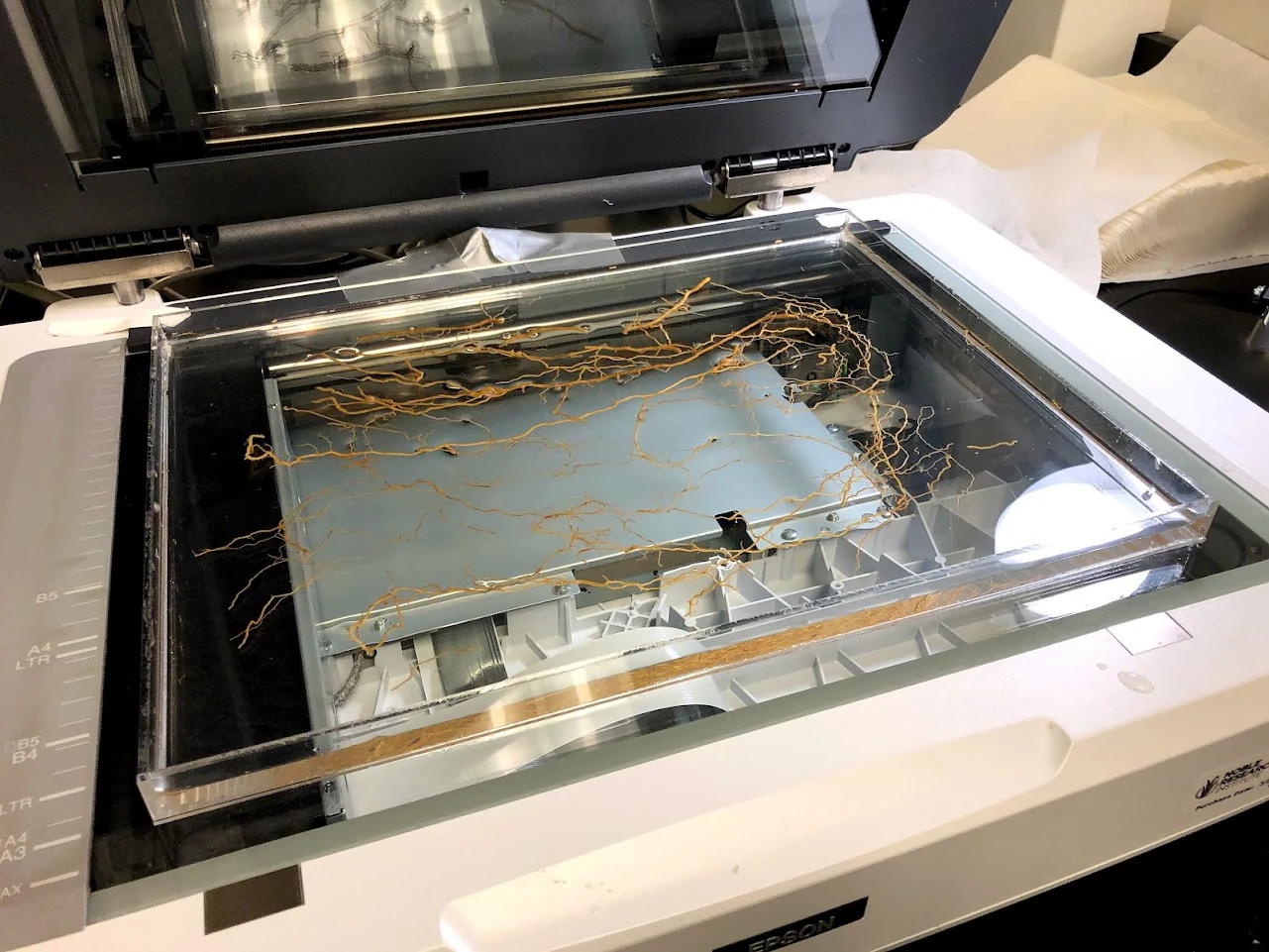
Arrange washed roots in a shallow layer of water, reduce overlaps, and capture a high-contrast image with a transparency-unit flatbed scanner. These trays follow the original acrylic tray plans published by Larry York in 2020.

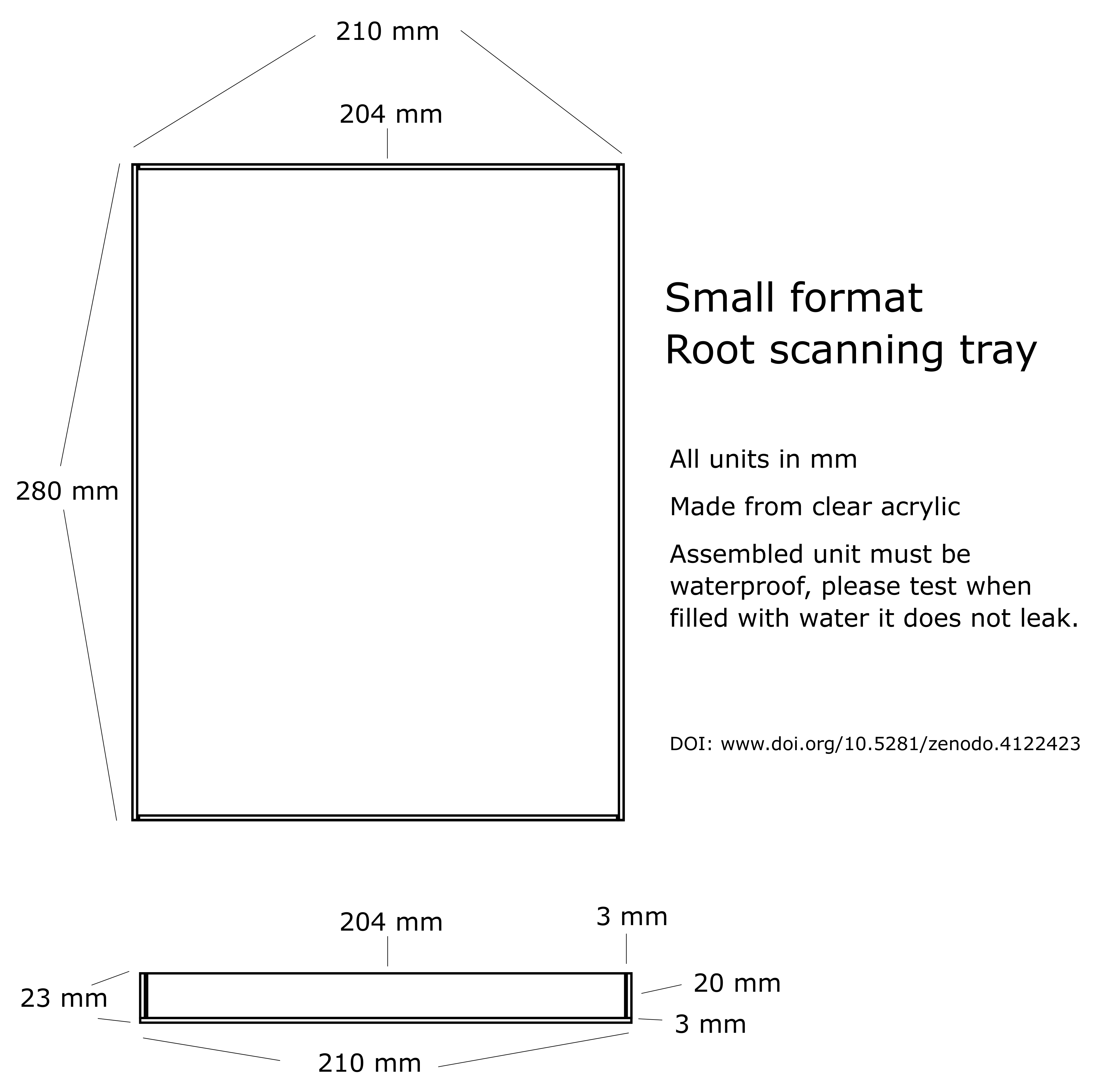
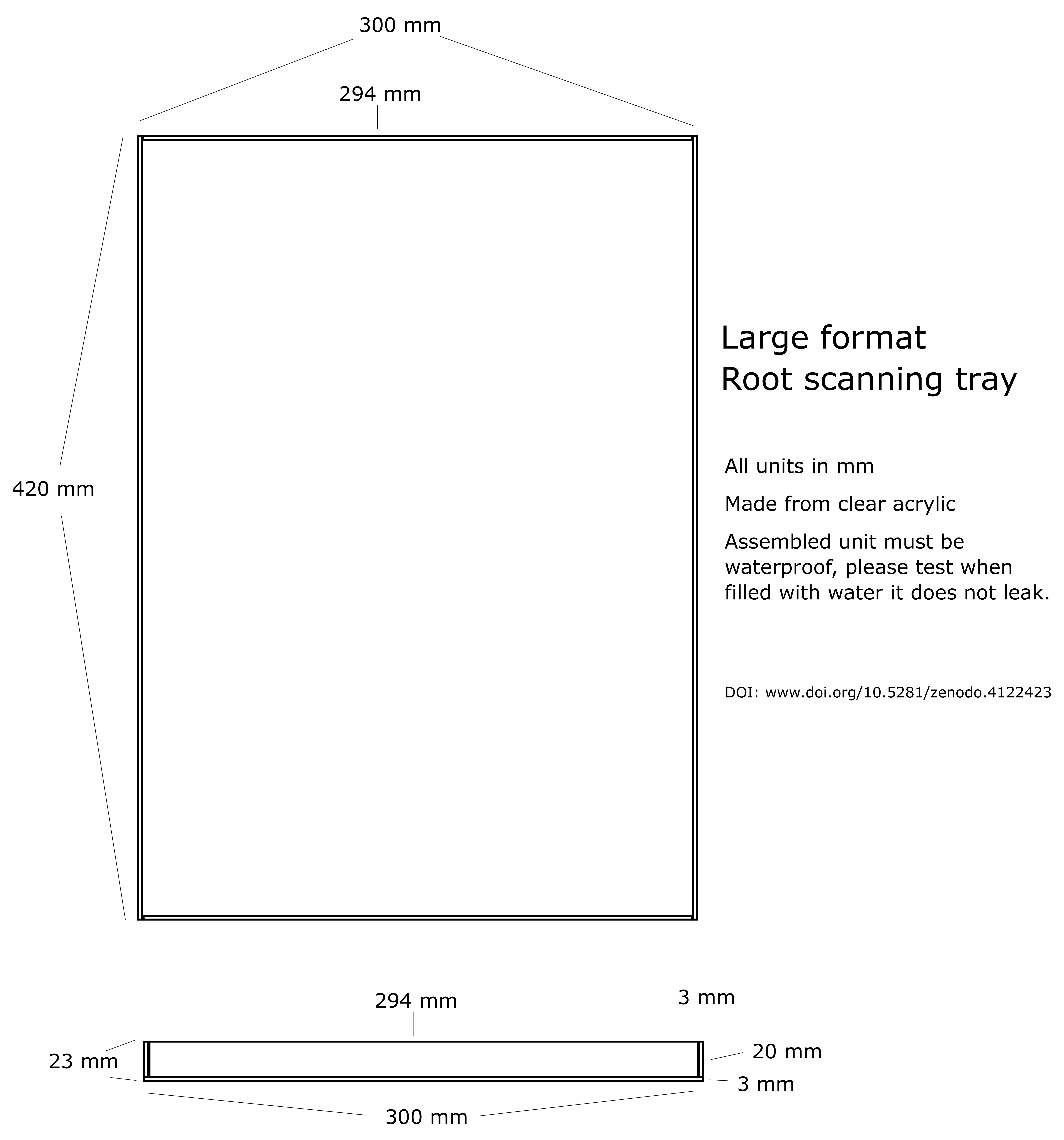
Made for root phenotyping and root image analysis, these clear acrylic trays help researchers capture detailed images of washed plant roots with flatbed scanners and transparency illumination. Choose the Small Letter / A4 tray (280 × 210 mm) for Epson Perfection V800 or V850-class flatbed scanners, or the Large A3 tray (420 × 300 mm) for Epson Expression 12000XL or 13000XL-class large-format scanners. The resulting scanned images can be analyzed with RhizoVision Explorer, WinRHIZO, IJ_Rhizo (for ImageJ), and other root image analysis software to measure traits such as root length, diameter, and area.

Size

$69per tray · USD

First shipments expected by . Order now; this is an estimated shipment date, not a guaranteed delivery date.

Request a quote

phenotyper — an AgenticForge Labs brand. Orders are processed securely by Shopify.

Checking availability…

USPS Ground Advantage shipping only. Rates and applicable taxes are calculated at checkout. Ask about availability. See our shipping policy and 30-day tray return policy.

Root scanning tray sizes for flatbed scanners

Choose your root scanning tray by scanner model
SpecificationSmall · Letter / A4Large · A3
Suggested Epson scannersPerfection V800 / V850Expression 12000XL / 13000XL
Outside dimensions280 × 210 mm420 × 300 mm
Internal width204 mm294 mm
Clear acrylic3 mm3 mm
Wall / overall height20 / 23 mm20 / 23 mm
FormatLetter / A4-classA3-class

Scanner fit: The Small Letter / A4 tray is intended for Epson Perfection V800 / V850-style scanners; the Large A3 tray is intended for Epson Expression 12000XL / 13000XL-style scanners. Both workflows require a transparency unit. Check lid clearance and the usable illuminated scan area before ordering: the tray’s outside dimensions are not the same as the area that can be imaged. Epson lists approximately 203 × 254 mm for V800/V850 transparency scanning and 309 × 420 mm for 12000XL/13000XL transparency scanning.

Original small- and large-format tray fabrication plans (Zenodo) ↗

Root scanner workflow

Root scanning and analysis, from sample to measurements.

A flatbed root scanner workflow brings together three practical tools: a scanner with transparency illumination, a clear acrylic root scanning tray, and root image analysis software. This approach helps researchers produce repeatable images of washed root systems without a dedicated proprietary imaging instrument.

01 / Prepare

Spread washed roots in the acrylic tray

Arrange cleaned roots in a shallow layer of water so they lie relatively flat. The clear tray helps keep samples contained and makes it easier to separate roots and reduce overlap before scanning. Use the Small Letter / A4 tray with V800 / V850-class scanners, or the Large A3 tray with 12000XL / 13000XL-class scanners. Confirm illuminated area and clearance before scanning.

02 / Capture

Acquire images with a flatbed root scanner

Use a suitable flatbed scanner with a transparency unit to capture detailed images of the root system. Consistent image resolution, sample preparation, and scanning settings help keep measurements comparable across samples and experiments.

03 / Analyze

Measure root traits with analysis software

The resulting images can be used for root analysis with RhizoVision Explorer, WinRHIZO, IJ_Rhizo for ImageJ, and other root phenotyping software. Depending on the analysis method, researchers can quantify root length, diameter, projected area, and related traits.

Whether you are assembling a plant root scanner setup or adding trays to an existing root phenotyping workflow, our acrylic root scanning trays provide a practical foundation for image acquisition. Compare tray sizes and order online, or explore the RhizoVision flatbed scanning guide for more information about preparing and imaging roots.

Research roots. Practical tools.

From the makers of RhizoVision Explorer.

These acrylic trays follow openly published plans for washed-root imaging. Use them with an appropriate flatbed scanner and transparency lighting, then analyze images with free, open-source RhizoVision Explorer ↗.

Explore root scanners, crown imaging & other methods ↗

Your cart

Your cart is empty. Choose a tray size to get started ↗.